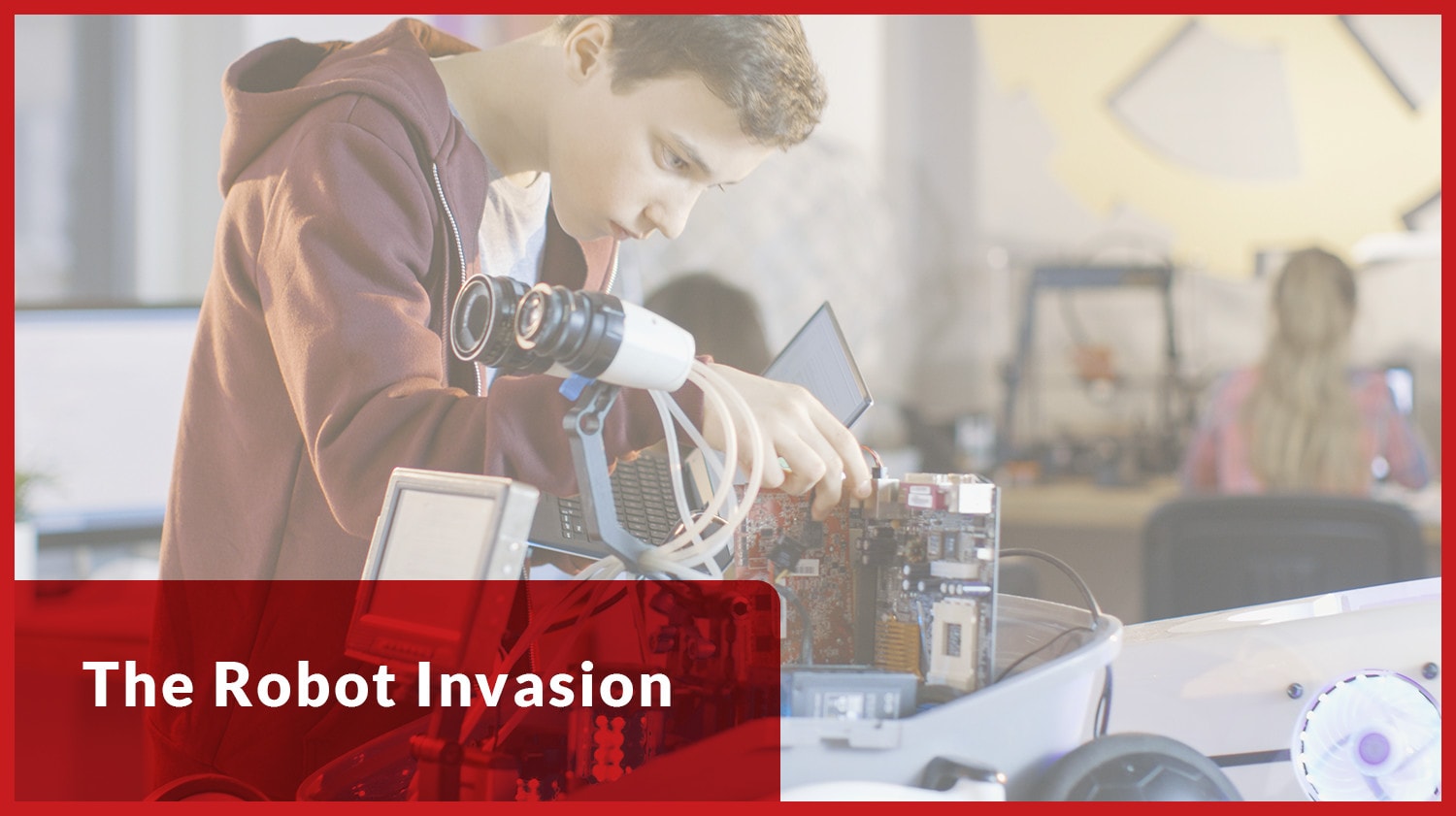
STEM programs all across the nation – all across the world – are introducing science, math, and engineering to students at younger ages than ever before. One of the most exciting new fields for hands-on student learning has only been made available recently – the fast-growing world of robotics! But how can schools make the most of their robotics budget?
And why does a school need robotics in the first place?
The Hands-On Approach
It won’t shock anyone to report that some children don’t respond well to sitting in class, taking notes, and listening to the teacher talk. Even the most fascinating teacher that brings learning to life will have at least a few pairs of glazed eyes staring back at them. Some kids are kinesthetic learners, and require “whole body movement” and “learn most easily when totally involved” in a task.
Though the “learning style” method is not always the most accurate model of student behavior, and is certainly not the be-all, end-all of instructions, it is true that using multiple methods of learning does engage students more. It also sets a rhythm in a classroom as they move from audio to visual to kinesthetic, creating an exciting atmosphere of learning that engages all parts of students’ brains.
The benefit of robotics is that it contains all three styles of learning. Physically arranging/creating the robots, creating paths, listening to instructions, making notes, and programming are all up to students.
Speaking of Programming . . .
That’s right! Robotics isn’t just BattleBots, though some students may lament that fact. Instead, one of the most important features of a robotics curriculum in K-12 classrooms is that it offers children their first introduction to computer programming.
It’s not out-of-the-question to say that computer programming may be one of the most needed fields in the future job market. But beyond the career potential, programming is also a great way to introduce kids to concepts like cause-and-effect, conditional statements, troubleshooting, deduction, applied math, spatial awareness, and critical thinking. Add to that the tech-literacy naturally being acquired as they program on devices and computers, and you have an entire field of study that accesses every part of the student mind.
The programming that comes with educational robots is often very visual, as well, chaining colorful blocks together to create a string of code. It’s exciting to look at, and feels like a game for many kids, meaning they may not even realize just how much they’re learning.
Forging New Leaders with Group Activities
Educational robotics programs often require a team. The students assemble the bots, sometimes create pathways on paper for the bots to travel on, or design limb movements or patterns, depending on the style. The students then must work together to activate, program, and use their new robots, especially when the lesson involves a stated goal – make your robot walk in a circle, for instance.
The communication tools forged by group activity are obviously beneficial talents that will follow a student for the rest of their lives, but there’s another product of group activity: leadership. Groups cannot function without a strong voice or two to guide the project, to keep a hand on the tiller and prevent pathways of communication from deteriorating.
Robotics are complicated, and the power of a good leader can make or break a robotics project. Every little part and chunk of code has to all gesture toward a larger goal, and they must be singular in purpose if they mean to achieve anything. A group of students working toward mismatched goals will never be able to complete a robotics project, which means, whether teacher-appointed or not, a student with natural leadership will step up to the task.
A strong robotics project at a school doesn’t just prepare students for the future of technology, but also for the future of collaboration.
The Invisible Benefits
It’s also important to remember that creating a robot may be the first real-world project the student has completed. Not an essay, or a school project, but a completed, fully-realized machine that moves and follows commands. Robotics can be a source of pride for students, and any one of the steps of creation may trigger a previously-undiscovered interest.
Sure, every student won’t grow up to be a robotics engineer, but problem-solving, math, programming, tool skills, and tech literacy will never go out of style.
A Robot for Every Occasion
It’s clear that a robotics program at a K-12 school can have massive benefits in multiple areas of study – it’s no wonder that schools all around the world are carving out room for these kinds of projects and clubs.
But where to start? When it comes to providing a school with affordable robotics solutions for a new STEM program, check out AIS’s robot options for a comprehensive list of products and programs. Don’t let your school fall behind, and give your students a leg up for their future.